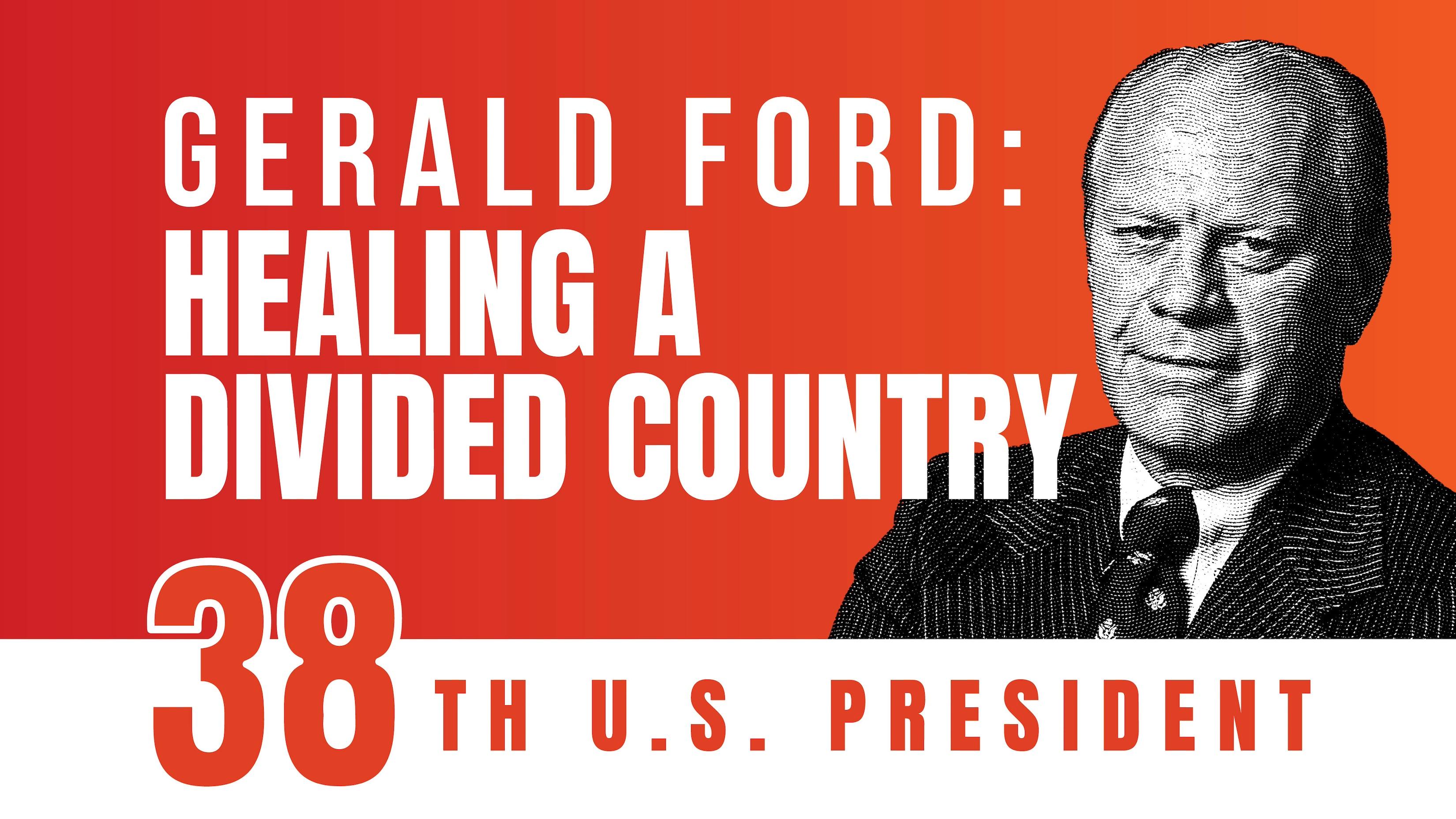
Gerald Ford: Healing a Divided Country
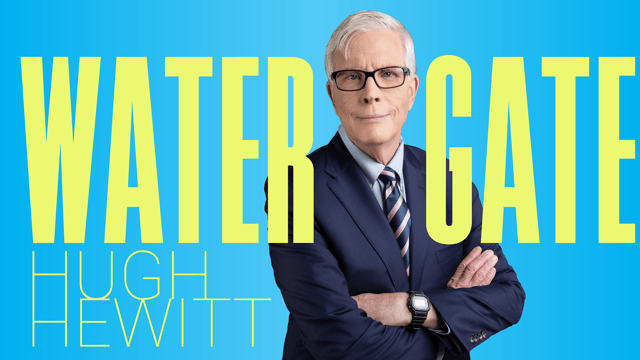
When Richard Nixon resigned as President following the Watergate scandal, America was in a bad way. The nation needed a leader who could mend the country’s divisions. Was Gerald Ford that leader? Political commentator Hugh Hewitt has an answer.
This video is part of the American Presidents 5-Minute Video Series.
Once you've seen them all, take our Presidents Quiz.
Topics
Hosted By
 Hugh Hewitt
Watch Related Video:
The date was August 9, 1974.
Something had just happened that had never happened before. An American president, Richard Nixon, resigned, forced out of office by a political scandal forever known as “Watergate.”
The nation was in a bad way: the fate of the Vietnam War remained uncertain, the economy was in a recession, and faith in the basic government institutions was almost non-existent. America was coming unglued.
Gerald Ford, now the 38th president of the United States, would have to hold it together. And, that’s exactly what he did.
In his first speech after being sworn in, Ford declared that “our long national nightmare is over.” It was what the American people needed to hear.
Ford was no stranger to adversity. He was born in Nebraska on July 14, 1913—the child of an abusive alcoholic father.
His mother, to save her son and herself, fled to Grand Rapids, Michigan. After divorcing Gerald’s father, she married again. This time she got it right. Her new husband, the owner of a paint store, raised young Gerald as his own.
Gerald grew into a popular, handsome, and athletic young man.
A star football player in high school and college, he won back-to-back national championships with the University of Michigan team in 1932 and 1933.
Recruited by the Detroit Lions and Green Bay Packers, Ford reluctantly turned them down. He was set on a career in law.
He worked his way through Yale Law School, supplementing his earnings by modeling. A photo of Ford and his girlfriend even made the cover of Cosmopolitan.
After passing the bar, Ford set up shop in his hometown of Grand Rapids.
But, like millions of others at the time, his plans were interrupted by the Second World War. Shortly after Pearl Harbor, Ford joined the Navy and saw considerable action in the South Pacific.
He returned home convinced that America could not retreat into isolationism as it had after World War I. If peace and freedom were to be preserved, America would have to preserve them. The voters of Grand Rapids agreed. In 1948, they elected him to Congress as a Republican.
His easygoing personality quickly earned him friends on both sides of the political aisle, including fellow Navy veterans John Kennedy and Richard Nixon.
Ford summed himself up as "a moderate in domestic affairs, an internationalist in foreign affairs, and a conservative in fiscal policy."
By 1965, he had worked his way up to Republican minority leader, but his ultimate goal was to become Speaker of the House. To achieve that goal, however, the Republicans would have to win a majority of seats. But in election after election, they failed.
Even in 1972, when Ford’s longtime friend President Richard Nixon won reelection in a landslide, the Republicans still could not take that majority in the House.
After that, Ford gave up. He told his wife Betty that he planned on serving only one more term.
Fate had other plans.
In October 1973, Vice President Spiro Agnew resigned—the result of a bribery scandal. The 25th Amendment required Nixon to nominate a new Vice President, subject to congressional approval.
Weakened by Watergate, Nixon asked House and Senate leaders of both parties who they would approve.
Gerald Ford was the almost unanimous choice.
Nixon, of course, hardly considered the possibility that he would have to resign. And Ford hardly considered the possibility that he would become president.
But that’s exactly what happened.
Ford became the first and only chief executive to ascend to the office without winning a single vote for vice president or president.
Initially, Americans were pleased with their new captain. Ford came across as honest, genial, and well-adjusted. He personified the American middle class: a devoted husband and father of four.
But Watergate refused to go away. The media that hounded Nixon out of office wanted blood: they wanted Nixon tried, convicted, and behind bars.
Ford saw it differently. One month into his term, he decided to spare the nation from further turmoil and division. Against the advice of nearly all his advisors, Ford pardoned Nixon for Nixon's involvement in the Watergate scandal.
If the pardon spared the nation, it did not spare Gerald Ford. His popularity plummeted almost overnight.
And that was not his only crisis.
He had to get America out of Vietnam. But how? The overwhelmingly Democratic Congress demanded a sudden and complete withdrawal. Ford said no and warned of disaster.
The Democrats refused to listen. They got the victory they wanted—defeat in Vietnam. With Ford’s hands tied, the South was left to fend for itself. North Vietnam and its Viet Cong allies overran the South in a matter of months.
There was one other catastrophe in Ford’s administration. It came from an unexpected source—a new late-night comedy show called Saturday Night Live. Taking one stumble on an airport tarmac as their inspiration, the comedy troupe turned the former star athlete into a clumsy buffoon.
Despite reducing inflation, standing firm against an aggressive Soviet Union, and steadily rebuilding the nation’s morale, Ford could not overcome the Nixon pardon and his SNL image. He lost a close election to Georgia governor Jimmy Carter in 1976.
In his inauguration speech, Carter had the grace to acknowledge Ford’s legacy, thanking him “for all he has done to heal our land.”
History has confirmed Carter’s judgment.
I’m Hugh Hewitt for Prager University.